 Fortress Windows
Doors and windows do more than frame a view; they help control drafts, moisture, noise, and everyday comfort. When seals fail or hinges loosen, small defects can grow into costly repairs. The U.S. Department of Energy’s Energy Saver guidance estimates that heat gain and heat loss through windows account for about 25%–30% of residential heating and cooling energy use. This figure measures energy use, not maintenance outcomes. Still, it shows why sound seals and properly fitted sashes matter. A draft is a clue. Look closely.
How To Maintain Doors And Windows For Long Lifespan starts with a simple habit: inspect what you can see and touch. Check weatherstripping for flattened areas, look for cracked caulk around exterior joints, and test locks without forcing them. Wipe tracks and hinges clean; grit can make a sliding door drag or a casement window squeak. Keep drainage openings clear, especially after leaves and windblown dust collect near the sill. For wood, watch for peeling paint or soft, darkened edges. For vinyl and aluminum, check seals, fasteners, and frame movement rather than assuming they need no care. Follow the manufacturer’s instructions before lubricating hardware or choosing cleaners. The wrong product may damage finishes or seals. Not glamorous, but useful.
Maintenance needs vary with climate, exposure, and product quality, so no single schedule suits every home. Even careful checks can miss hidden water entry. If a frame stays wet, glass fogs between panes, or a door stops closing squarely, record the change and consult a qualified window or building professional. This guide turns routine checks into practical steps, while recognizing that some repairs go beyond basic upkeep.
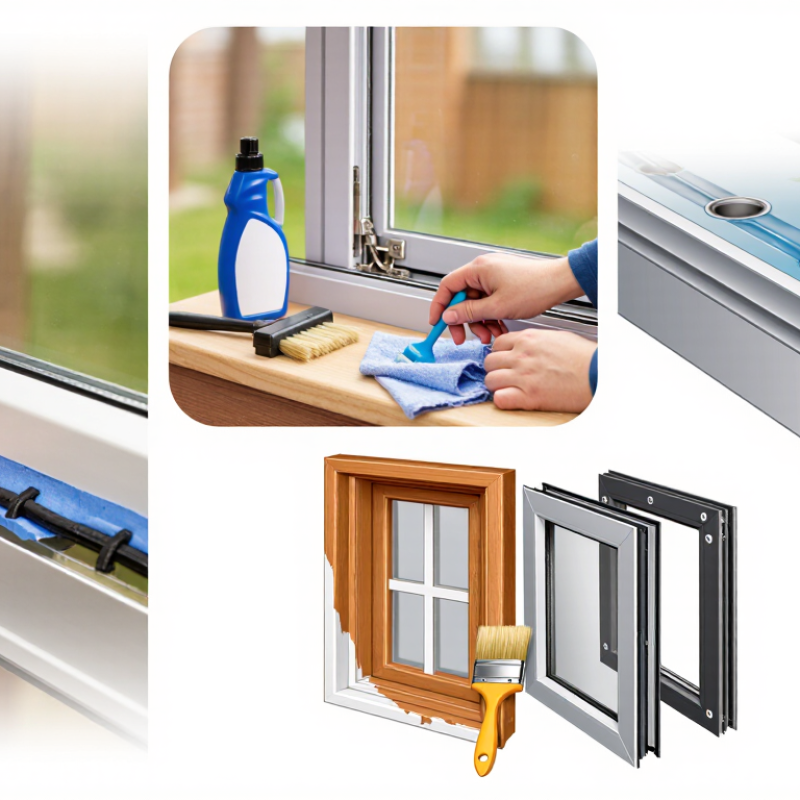
Inspect doors and windows at least twice a year, and after severe storms. Look for cracked glass, peeling paint, soft or swollen wood, loose hinges, and gaps around the frame. Run a hand near the edges on a windy day; a cool draft can reveal a failed seal. Small clues matter. Open and close each unit slowly. Scraping, sticking, or a latch that no longer lines up may signal movement, worn hardware, or moisture damage. Check weatherstripping for flattened spots and inspect caulk for cracks or separation.
The U.S. Department of Energy’s Energy Saver guidance estimates that heat gain and loss through windows accounts for
25–30% of residential heating and cooling energy use.
That makes damaged seals more than a comfort issue. Note where drafts occur, take dated photos, and record whether the problem changes after rain. A simple paper test can help: close the door on a sheet; if it pulls out easily, the seal may be weak. It is not a precise measurement, though. Avoid forcing swollen frames or adjusting hardware without understanding the cause. Persistent condensation between glass panes, soft frame material, or water stains deserve prompt assessment by a qualified building professional.
Check them twice a year and after severe storms. Look for cracked glass, loose hinges, peeling paint, or frame gaps.
On a windy day, move your hand near the edges. A cool stream of air may point to a weak seal. It is only a clue.
Close a door or window on a strip of paper. If it slides out easily, the seal may be weak. The test is not precise.
Open and close it slowly. Scraping, sticking, or a misaligned latch may indicate movement, worn hardware, or moisture damage. Don’t force it.
Wipe away grit first, then apply a small amount of suitable lubricant to moving parts. Move the door several times and wipe off drips.
Excess oil attracts dust and can leave marks. If the hinge still squeaks, check for loose screws or a misaligned door.
Replace it if it is torn, brittle, flattened, or no longer springs back. Choose a compatible size and shape, then check that the door latches smoothly.
Look for soft wood, water stains, peeling paint, or persistent condensation between glass panes. A qualified building professional should assess concerning damage.
Check lower rails, frame joints, drainage openings, and the upper edge. Keep drainage openings clear. A quick indoor glance may miss damage above.
Extending the life of doors and windows starts with regular, careful attention. Inspect them for signs of wear or damage, such as loose hinges, cracked glass, sticking locks, or gaps around the frames. Clean the frames, glass, and tracks regularly to remove dust and debris that can interfere with smooth movement. Applying suitable lubricant to hinges, locks, and other moving parts can also help prevent friction and stiffness.
How To Maintain Doors And Windows For Long Lifespan also means looking after seals, weatherstripping, and painted or finished surfaces. Check these parts for cracks, peeling, or deterioration, and refresh or replace them when needed to help keep out drafts and moisture. Addressing small problems early—such as tightening a loose fitting or clearing a blocked track—can prevent more extensive damage. With routine checks and simple upkeep, doors and windows can remain functional, comfortable, and attractive for years.
