Fortress Windows Fortress Windows

China Top 10 How To Choose Doors For Commercial Buildings?

Time:2026-10-13 Author:Sophia
0%

Choosing doors for a commercial building affects safety, traffic flow, energy use, and daily comfort. The right entrance should welcome visitors while protecting staff, equipment, and valuable merchandise. In China, architects and contractors often compare fire-rated, glass, steel, aluminum, automatic, and security doors for different commercial settings.

This guide, China Top 10 How To Choose Doors For Commercial Buildings, explores practical decisions from real project needs. A shopping mall may require wide automatic entrances and durable hardware. An office tower may prioritize acoustic control, access management, and a polished appearance. A warehouse needs stronger frames, reliable hinges, and clearance for frequent deliveries. Every choice should match the building’s layout, occupancy, climate, and maintenance plan.

Details matter.

Professional teams should verify fire ratings, accessibility features, wind resistance, thermal performance, and local building requirements before ordering. Door dimensions must suit trolley movement, emergency routes, and expected visitor volume. Material quality also matters. Poorly finished metal can corrode near coastal cities, while weak closers may fail under constant use. Experienced suppliers can provide test reports, installation guidance, warranty terms, and replacement support. Still, no supplier is perfect. Specifications should be checked against the actual site, not accepted blindly. This article compares ten practical door options and explains where each one performs best. It also considers common mistakes, including choosing attractive doors that create queues, noise, or expensive maintenance. A reliable decision balances appearance, safety, performance, budget, and long-term service.
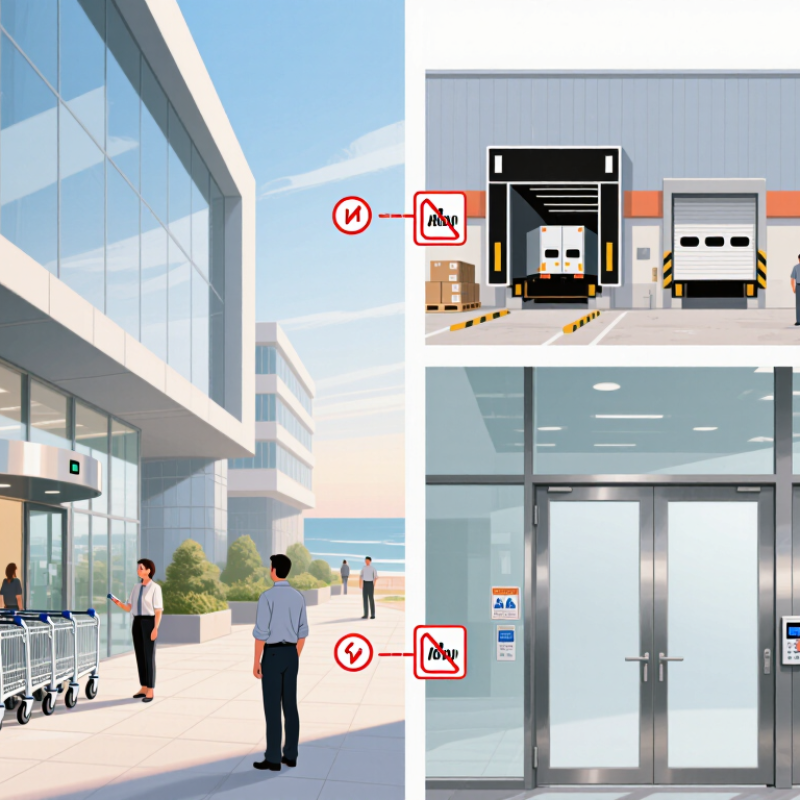
China Top 10 How To Choose Doors For Commercial Buildings?

Define Commercial Door Requirements and Building Use

China Top 10 How To Choose Doors For Commercial Buildings?

Define Commercial Door Requirements and Building Use

Door selection should begin with building use, not appearance. An office entrance faces steady pedestrian traffic, while a warehouse door must handle carts, forklifts, wind, and dust. Hospitals need smooth surfaces and reliable cleaning. Retail doors also require clear visibility and controlled access.

The U.S. Energy Information Administration’s 2018 Commercial Buildings Energy Consumption Survey recorded about 5.9 million commercial buildings. This scale shows why one standard door rarely fits every facility. Review local fire codes, accessibility rules, escape routes, and energy requirements before choosing materials. Fire-rated doors must match the wall assembly and approved hardware. A door that looks strong may still fail the required test. That detail is often missed.

Tips: Walk through the building during its busiest hour. Count users, carts, deliveries, and repeated openings. Measure the largest equipment before ordering. Check whether cleaners can reach hinges, closers, and floor gaps. For public entrances, confirm clear opening width and threshold design under applicable accessibility standards. For loading areas, compare impact resistance with actual vehicle speed. Acoustic performance also matters in clinics, schools, and offices. Incomplete surveys create expensive changes later. Sometimes, the cheapest door becomes the costliest maintenance decision.

Compare Door Materials, Designs, and Performance Standards

Choosing doors for commercial buildings in China requires more than matching a façade. Material affects safety, maintenance, comfort, and service life. Steel doors resist impact and fire when properly specified. Aluminum doors are lighter and resist corrosion, but their thermal performance needs careful review. Glass doors improve daylight and visibility. They also need safety glazing, edge protection, and clear markings. Wood or composite doors create warmth, yet moisture can damage poorly sealed edges.

Design should follow movement patterns, not decoration alone. A busy hospital entrance may need automatic sliding doors and wide clear openings. A warehouse often needs robust hinged or sectional systems. For offices, acoustic seals can reduce corridor noise. Check hardware, threshold height, escape direction, and cleaning access. Small details matter. Project reviews often reveal attractive doors failing because frames were misaligned. That mistake increases drafts, noise, and repair costs.

Performance standards should be written into procurement documents. Confirm fire resistance, smoke control, air leakage, water resistance, wind load, acoustic ratings, and operating cycles. Also verify accessibility requirements, emergency egress rules, and applicable national and local codes. Request test reports from accredited laboratories, not only supplier claims. Inspect samples and mock-ups before placing a large order. Site conditions can expose weaknesses that brochures hide. A perfect specification is unlikely. Review performance after installation, then adjust maintenance schedules.

Evaluate Security, Fire Safety, and Accessibility Features

China Top 10: How to Choose Doors for Commercial Buildings?

A commercial door must resist intrusion without delaying evacuation. On site, a highly secure door can still fail if staff prop it open. Choose reinforced leaves, protected hinges, tested locks, and monitored access control. Confirm whether the system remains safe during power loss. Security hardware should support daily traffic, not create a bottleneck.

Fire performance needs documented testing, not attractive labels. The NFPA report Fire Loss in the United States During 2023 recorded about 1.39 million fires and 3,670 civilian fire deaths. Select a complete fire-door assembly with the correct rating, closer, latch, frame, and smoke control. A fire-rated leaf with the wrong hardware is not a reliable solution. For Chinese projects, verify compliance with GB 55037-2022 and the approved building design.

Accessibility deserves equal attention. The World Health Organization’s Global Report on Health Equity for Persons with Disabilities estimates that 1.3 billion people experience significant disability. Provide adequate clear width, low thresholds, reachable controls, visual contrast, and manageable opening force. Panic hardware may help evacuation, but poorly positioned readers can obstruct wheelchair users. Test the door with a loaded trolley, a wheelchair, and a crowded corridor. Specifications often look complete. Real movement exposes the gaps.

China Top 10 How To Choose Doors For Commercial Buildings? - Evaluate Security, Fire Safety, and Accessibility Features

No. Evaluation Dimension Recommended Data or Benchmark Suitable Door Configuration Verification Method Priority
1 Building Use and Door Location Classify the opening as an entrance, office door, plant-room door, corridor door, stair door, fire compartment door, or emergency exit. Use entrance systems for public access, solid-core doors for general rooms, and certified fire doors for protected routes and compartment boundaries. Review the approved architectural, fire-safety, and evacuation plans for the project. Critical
2 Fire-Resistance Rating Select the required integrity and insulation period according to the building fire strategy; common ratings include 30, 60, 90, and 120 minutes. Use a complete tested door assembly consisting of the leaf, frame, hinges, closer, latch, glazing, seals, and approved hardware. Check a valid test or certification report, such as testing to GB 12955, EN 1634-1, or an applicable local code. Critical
3 Smoke and Air Leakage Control Smoke-control doors should use continuous perimeter seals and a compatible automatic closing device; leakage limits must follow the specified test standard. Use a tested smoke-seal arrangement on stair enclosures, smoke compartments, fire lobbies, and service corridors. Confirm smoke-leakage test results and ensure seals are not cut, painted, or obstructed during installation. High
4 Security and Forced-Entry Resistance Assess threat level, occupancy, asset value, and exposure. Specify reinforced leaves, protected hinges, multi-point locking, and security-rated cylinders where necessary. Use steel or reinforced composite doors for plant rooms, data rooms, loading areas, and restricted-access zones. Review forced-entry test evidence, hinge-side protection, lock compatibility, frame anchorage, and installation details. High
5 Emergency Egress Hardware Doors on escape routes must allow rapid exit without a key. Panic or emergency exit hardware may be required depending on occupant load and local regulations. Use outward-opening exit doors where required, with clearly visible hardware and fail-safe access-control interfaces. Conduct an egress inspection and verify compliance with the approved evacuation design and applicable fire code. Critical
6 Clear Opening and Accessibility Provide a clear opening suitable for wheelchair and equipment movement; many accessibility references use approximately 815 mm as a minimum clear width, while local Chinese requirements may specify different values. Use adequately sized single-leaf or double-leaf doors, with lever handles or accessible operating devices. Measure the clear opening in the finished condition and check approach space, circulation space, and door swing. Critical
7 Opening Force and Door Closers Use low-force operation where accessibility is required. Heavy fire-door closers should be selected carefully so that the door closes reliably without creating excessive operating resistance. Specify adjustable closers, hold-open devices linked to the fire alarm where permitted, or automatic operators for high-traffic accessible routes. Measure operating force after installation and confirm that hold-open devices release correctly during alarm testing. High
8 Threshold, Floor Level, and Slip Safety Avoid unnecessary steps and raised thresholds on accessible routes. Where a threshold is unavoidable, keep the transition gradual, stable, and compliant with the applicable accessibility code. Use flush thresholds for offices and public routes; use durable, sealed thresholds for wet areas and exterior entrances. Inspect the finished floor transition, drainage, slip resistance, and compatibility with wheelchairs, carts, and cleaning equipment. High
9 Durability and Traffic Frequency Estimate daily cycles, impact exposure, trolley traffic, humidity, and cleaning frequency. High-use entrances require stronger frames, hinges, closers, and protective finishes. Use heavy-duty assemblies for lobbies, hospitals, schools, retail areas, logistics zones, and shared corridors. Compare cycle-test evidence, hardware load capacity, warranty terms, spare-part availability, and maintenance intervals. Medium
10 Glazing, Visibility, and Maintenance Use safety glazing in impact-prone areas and vision panels where users need to see approaching traffic. Fire-rated glazing must be part of the tested door assembly. Select laminated or toughened safety glass for ordinary doors, and certified fire-resisting glazing for fire-rated doors. Check glass markings, impact-safety documentation, fire-test scope, visibility contrast, cleaning access, and replacement procedures. High

Note: Door performance depends on the complete installed assembly, including the leaf, frame, hardware, seals, glazing, wall construction, and installation method. Always confirm the current requirements of the project location and the applicable Chinese building, fire-safety, and accessibility codes.

Assess Energy Efficiency, Durability, and Maintenance Needs

China Top 10: How to Choose Doors for Commercial Buildings?

Commercial doors influence energy use, security, traffic flow, and maintenance costs. The U.S. Department of Energy reports that heating and cooling can represent about 40% of commercial building energy consumption. The figure is not door-specific, but poorly sealed entrances still waste conditioned air. Check the door’s U-value, air leakage rating, weather seals, and glazing performance. A busy entrance should also include a properly sized closer, because a door left open for eight seconds can disrupt indoor comfort.

Durability depends on traffic, impact, moisture, and cleaning chemicals. Record daily opening cycles before choosing materials or hardware. For warehouses, inspect bottom edges and hinges monthly. For offices, examine closer speed and gasket compression. The Whole Building Design Guide recommends vestibules or airlocks where climate and occupancy justify them. This can reduce direct air exchange, although it also consumes floor space. That trade-off is easy to overlook.

Maintenance needs should appear in the purchase specification, not after installation. Request replacement intervals for seals, rollers, closers, and sensors. Keep access panels reachable. The National Institute of Standards and Technology links preventive maintenance with better building performance and longer equipment life. In practice, maintenance teams may still miss small leaks. A simple paper test around the frame can reveal weak sealing, but it is not a certified assessment. Check performance again after seasonal temperature changes.

Select Reliable Suppliers and Verify Installation Quality

Selecting commercial doors in China requires more than comparing prices. A reliable supplier should provide clear technical drawings, material details, testing records, and installation procedures. Request recent project references and inspect production quality when possible. Check frame dimensions, hardware compatibility, fire performance, and resistance to wind, water, and frequent use. A polished showroom is not enough.

Tips: Ask for a sample door before placing a large order. Confirm tolerances in writing. Use an independent inspection when the project is critical. During installation, verify opening sizes before fixing frames. Anchors must be secure, seals must be continuous, and doors should close without scraping. Check every hinge, lock, closer, and threshold. Take dated photographs and record corrections.

Installation quality often decides whether a good door performs well. Qualified technicians should follow approved drawings and local building requirements. The supplier should provide training, commissioning support, maintenance instructions, and a clear response process for defects. Do not accept rushed handover documents. Small gaps can become serious problems later. I would also allow time for rechecking, because measurements are sometimes wrong and site conditions can change. Reliability comes from evidence, careful supervision, and honest communication.

FAQS

How should I choose a door material for a commercial building?

Steel offers strong impact and fire resistance when correctly specified. Aluminum is lighter and resists corrosion. Glass improves daylight and visibility. Wood or composite doors add warmth but need sealed edges. No material is perfect.

Which door design suits a busy hospital entrance?

Automatic sliding doors can support frequent movement and wide clear openings. Check opening speed, sensor coverage, emergency operation, and cleaning access. Test the entrance with wheelchairs and loaded trolleys.

What should I check for warehouse doors?

Warehouses often need robust hinged or sectional systems. Review impact resistance, hardware strength, threshold height, and operating cycles. A weak frame can fail even with a strong door leaf.

What performance information should procurement documents include?

Specify fire resistance, smoke control, air leakage, water resistance, wind load, and acoustic performance. Include accessibility and emergency egress requirements. Ask for accredited laboratory reports, not only supplier claims.

How can a commercial door improve fire safety?

Use a complete tested assembly with the correct leaf, closer, latch, frame, and smoke control. Confirm compliance with applicable national and local codes. A fire-rated leaf with mismatched hardware is unreliable.

How can doors balance security and emergency evacuation?

Select reinforced leaves, protected hinges, tested locks, and monitored access controls. Confirm safe operation during power loss. Security must not create an evacuation bottleneck. Daily behavior matters too.

What accessibility details deserve close attention?

Provide adequate clear width, low thresholds, reachable controls, visual contrast, and manageable opening force. Check reader locations carefully. A wheelchair user should not need to twist around hardware.

Why are mock-ups and site inspections important?

Samples reveal problems that brochures hide. Inspect frame alignment, seals, thresholds, and movement before large orders. Misaligned frames can increase drafts, noise, and repair costs. Review the finished door honestly.

Conclusion

How To Choose Doors For Commercial Buildings begins with understanding the building’s purpose, traffic patterns, occupancy, and operational requirements. Offices, retail spaces, warehouses, healthcare facilities, and public buildings may each need different door types, dimensions, opening systems, and levels of performance. Comparing materials such as steel, aluminum, glass, and engineered composites can help decision-makers balance appearance, strength, cost, and long-term reliability. Design choices should also comply with applicable performance standards and suit the building’s architectural style.

Security, fire resistance, accessibility, energy efficiency, durability, and maintenance should be evaluated as part of the overall selection process. Features such as controlled access, emergency exits, suitable insulation, clear opening space, and dependable hardware can improve safety and daily usability. Finally, buyers should assess supplier experience, product documentation, warranties, customization capabilities, and after-sales support. Professional installation and careful inspection are essential to ensure correct alignment, smooth operation, weather resistance, and lasting performance.

Sophia

Sophia

Sophia is a dedicated marketing professional with an exceptional depth of knowledge about her company's products and services. With a keen understanding of market trends and customer needs, she crafts insightful blog posts that not only inform but also engage readers, enriching the company’s online......